CREATIVE PROCESS
My practice combines traditional still-life photography with custom-built miniature environments, bespoke set design and controlled studio lighting to create visually driven narratives for brands.
A key part of my approach is the construction of bespoke sets where the client’s product becomes the central element within a designed visual world. These environments are not backgrounds, but narrative structures that give meaning, context and depth to the subject.
Through AI-assisted pre-visualisation and digital experimentation, I develop and refine concepts before production begins. This allows ideas to be explored efficiently, production decisions to be made with clarity, and ambitious visual directions to be realised with greater control.
The workflow moves between digital exploration, physical set construction and studio photography, combining creative thinking with technical precision. The result is a complete visual solution designed to communicate product identity, strengthen brand storytelling and create imagery with lasting impact.
RAYBAN AVIATOR
ENVIRONMENT DEVELOPMENT
The background environments were developed using a combination of AI-assisted generation and layered Photoshop composition. Multiple visual references were combined and refined through digital post-production to establish scale, atmosphere, and narrative direction before physical production began.

PHYSICAL SET CONSTRUCTION
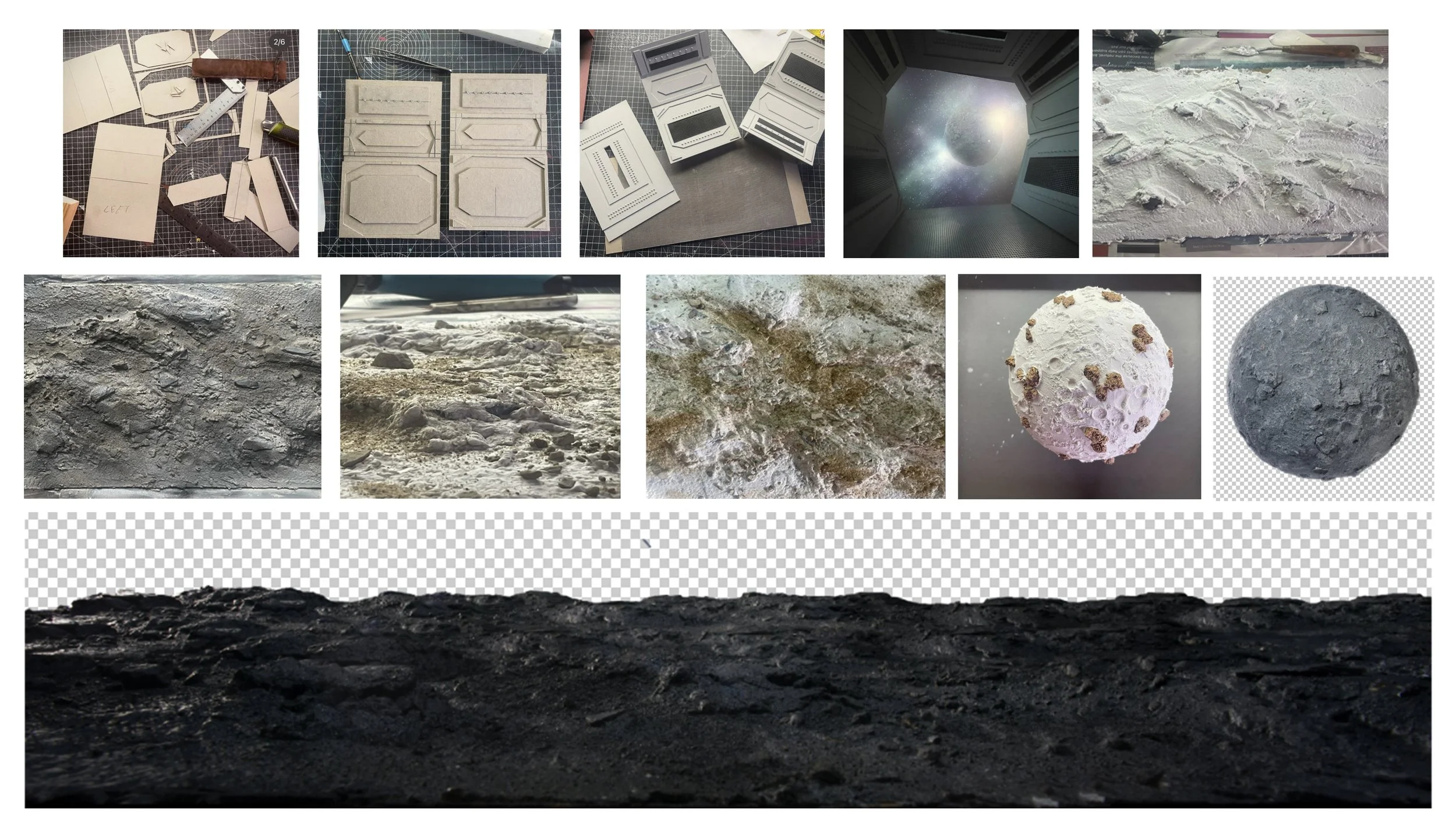
The physical environments were built as custom miniature sets, designed specifically to interact with the scale and reflective surface of the Ray-Ban Aviator model. Each set was constructed by hand using everyday materials, allowing precise control over texture, perspective, and lighting.
FINAL IMAGERY
OUTCOME
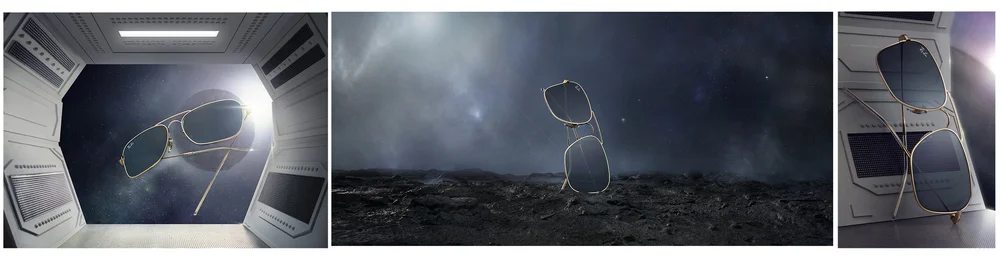
The final series merges physical craftsmanship with digital pre-visualisation to create a continuous narrative journey for the product. The Ray-Ban Aviator is repositioned within an imagined space exploration context, demonstrating how commercial objects can be reinterpreted through set design, storytelling, and controlled photographic environments.
CHRISTOPHER WARD
This project explores how product storytelling can extend beyond traditional studio execution by building controlled visual environments that communicate performance, function, and emotional value. The objective is to translate product capability into a structured narrative system that strengthens brand communication and commercial impact.
For the first watch, the concept is built around a maritime environment that visually supports the product’s diving functionality. The production combines physical miniature construction with AI-assisted environment development, allowing full control over scale, atmosphere, and narrative direction while maintaining an efficient workflow.
WATCH 01 — ASSET DEVELOPMENT / SET CONSTRUCTION
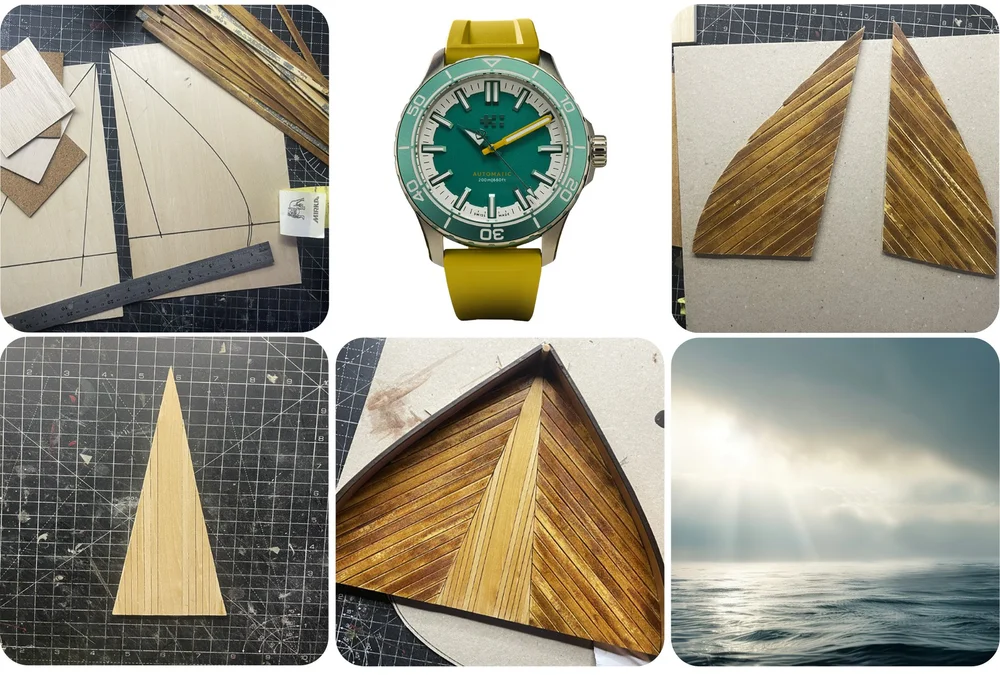
The visual foundation was created through a hybrid production method. A miniature yacht deck was hand-built, while surrounding ocean environments were developed digitally using AI-assisted generation and compositing. This creates a complete narrative world before final capture.
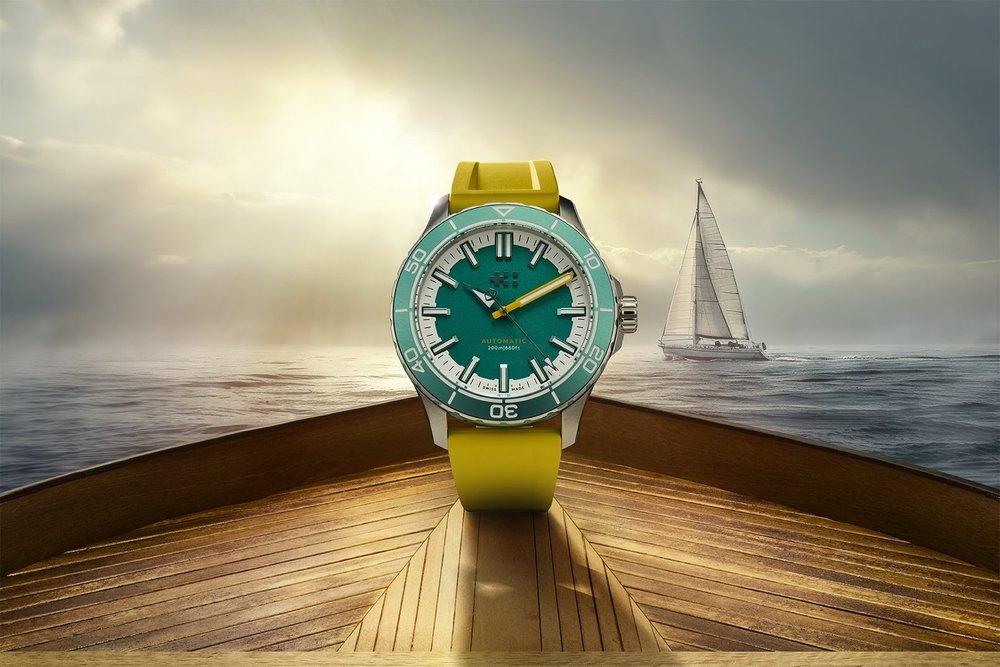
The final image places the watch within a cinematic maritime environment where light and reflection reinforce performance and exploration.
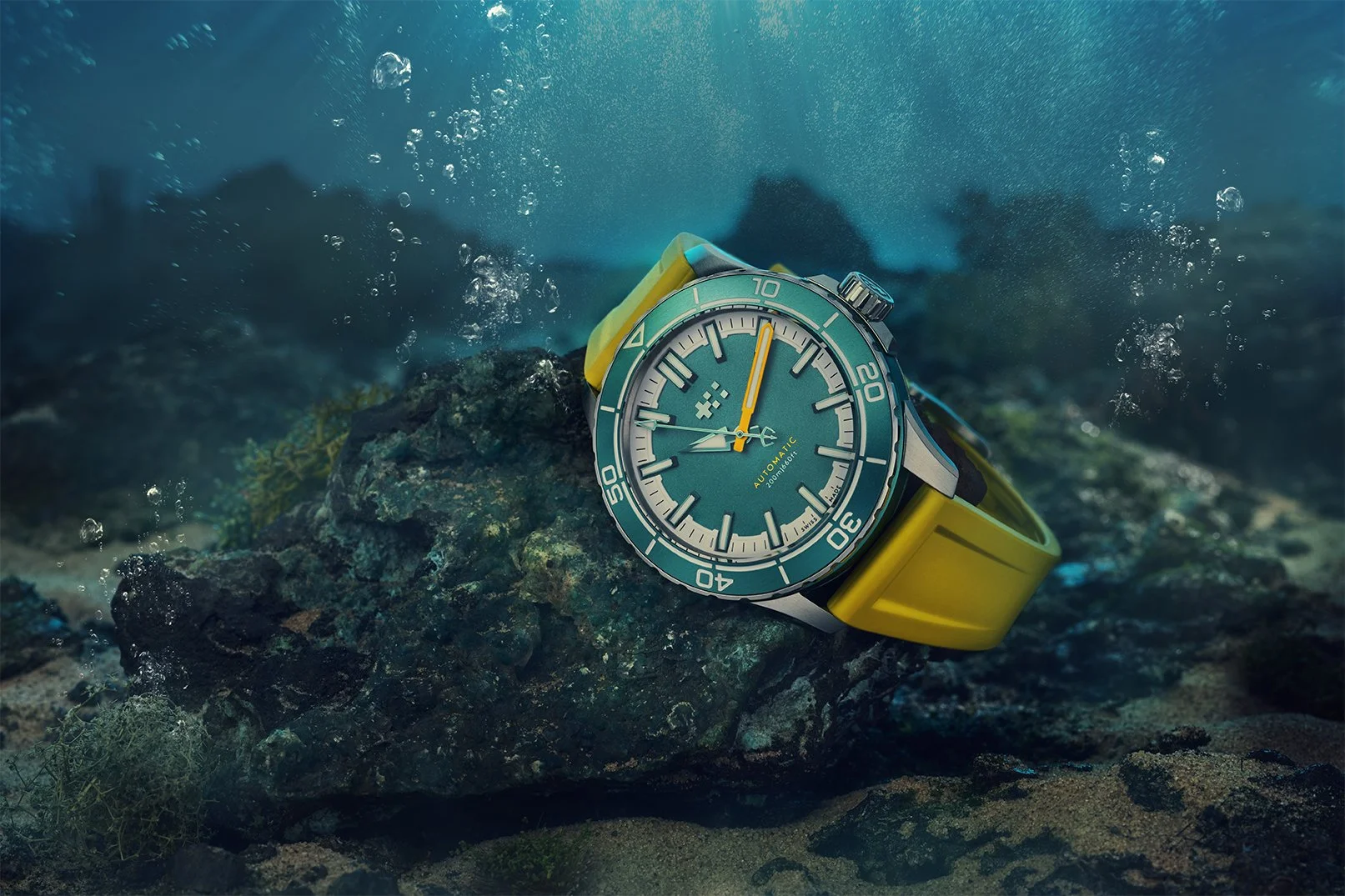
The second watch extends the methodology into an underwater environment combining real capture with CGI and AI enhancement.
WATCH 02 — UNDERWATER ENVIRONMENT / HYBRID PRODUCTION
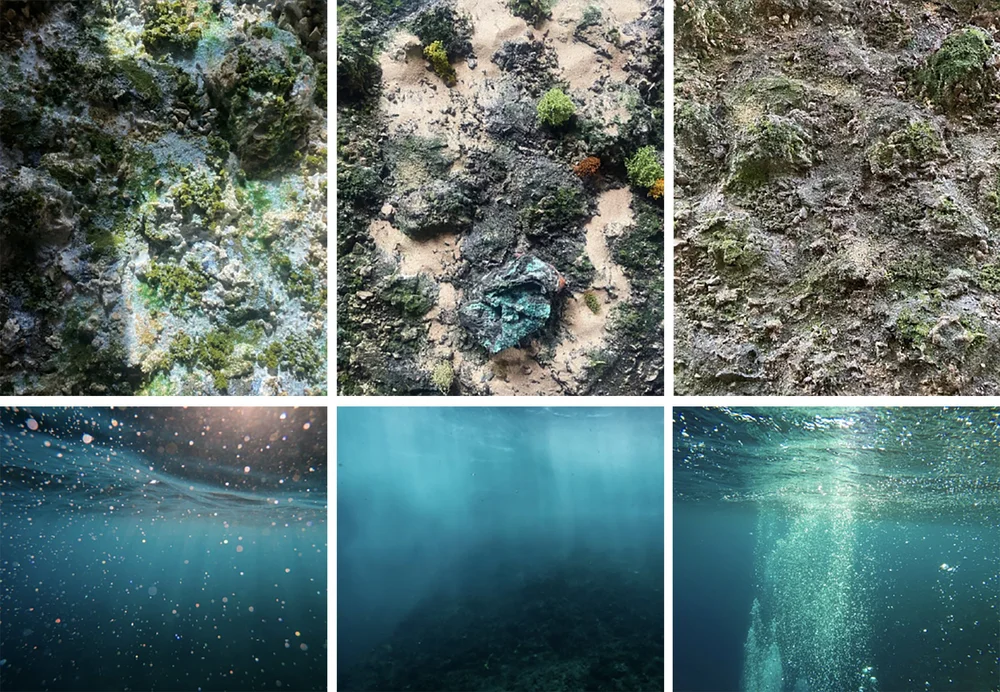
The asset stage involved photographing the watch underwater, later extended with digital environmental layering to create depth and atmosphere.
The final composition integrates photographic capture with CGI and AI-assisted environment design.
OUTCOME
The final result demonstrates a structured system that translates product functionality into narrative-driven commercial imagery through a hybrid production approach combining physical sets, AI, and controlled photography.
ALIEN SUN — SECONDS TO MIDNIGHT
This project was commissioned to develop the visual identity for the album “Seconds to Midnight”, a concept built around the Doomsday Clock. The brief focused on translating themes of collapse, societal decay, and existential tension into a single cohesive visual system capable of functioning as the official album artwork.
The approach combines physical set construction, AI-generated environment development, and digital post-production, creating a controlled production pipeline designed for narrative-driven commercial imagery.
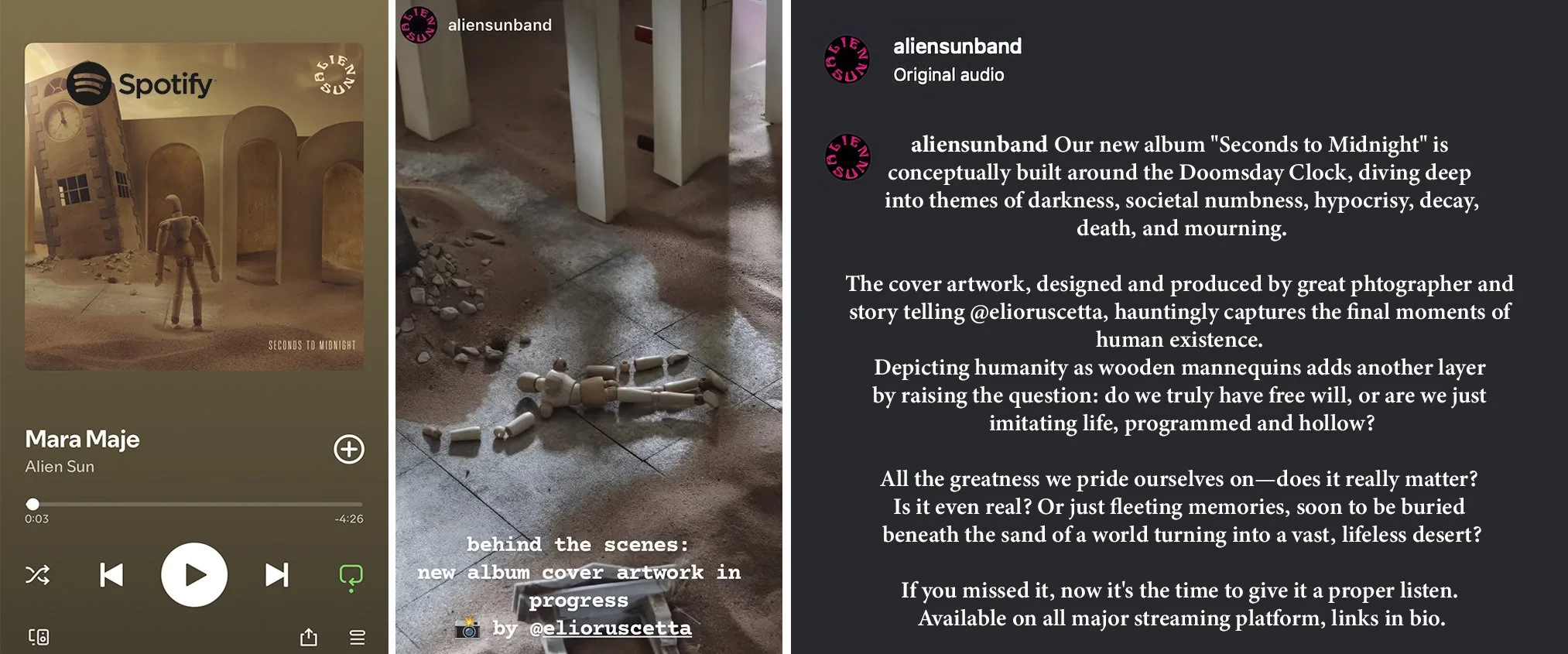
FINAL ARTWORK — ALBUM COVER
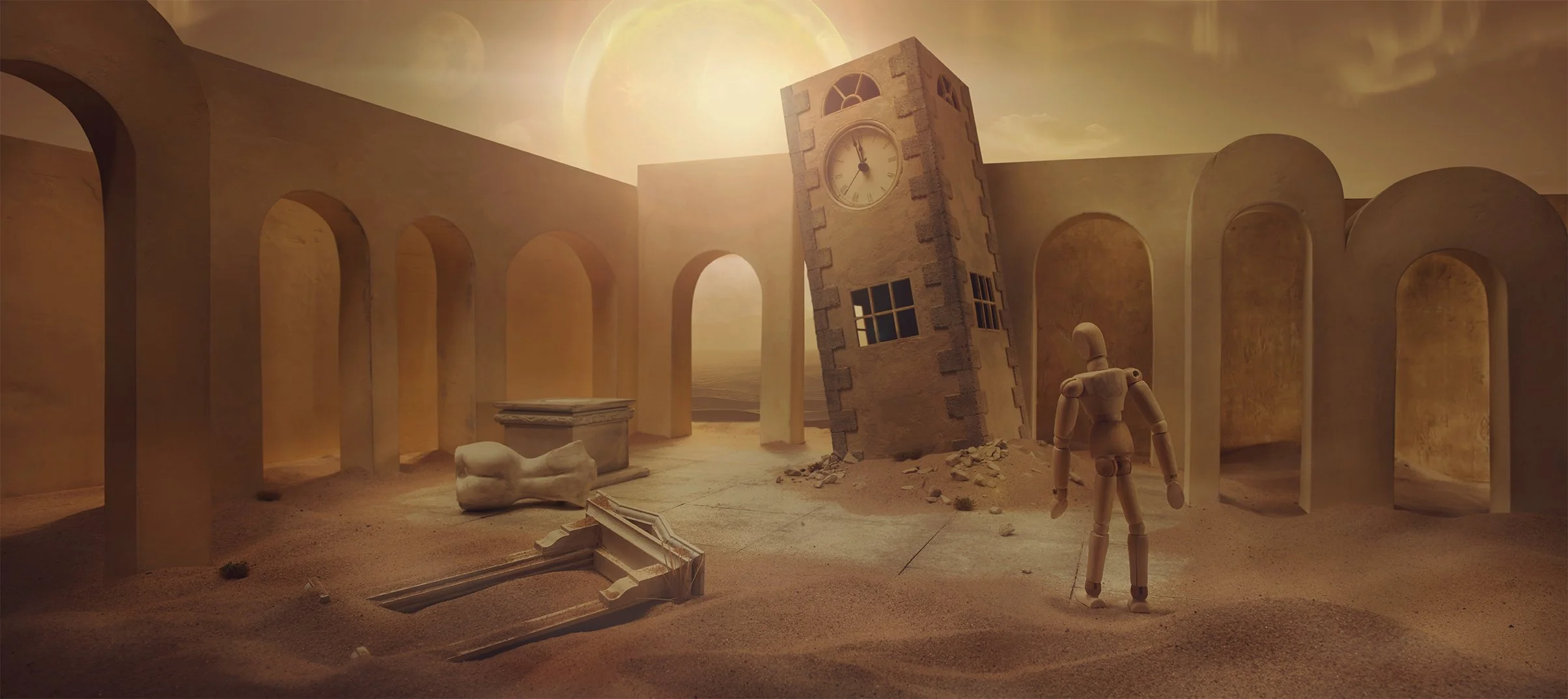
The alien sun and atmospheric lighting system were developed using AI-assisted generation, allowing precise control over mood, intensity, and narrative direction. This element acts as the emotional and symbolic core of the composition.
The final composition unifies all production elements into a single image representing the moment of collapse and stillness at the centre of the album’s narrative.
CONCEPT DEVELOPMENT — ALIEN SUN ENVIRONMENT

The visual language was built around the concept of an alien sun casting an unnatural light over a decaying world. The environment was developed using photographic desert imagery combined with digital manipulation to establish scale, atmosphere, and narrative tension.
COMPOSITION / POST PRODUCTION

The background environment was refined in post-production, combining multiple visual layers to create a controlled and coherent visual world. This stage defines the final atmospheric structure of the image.
SET BUILD — PHYSICAL CONSTRUCTION
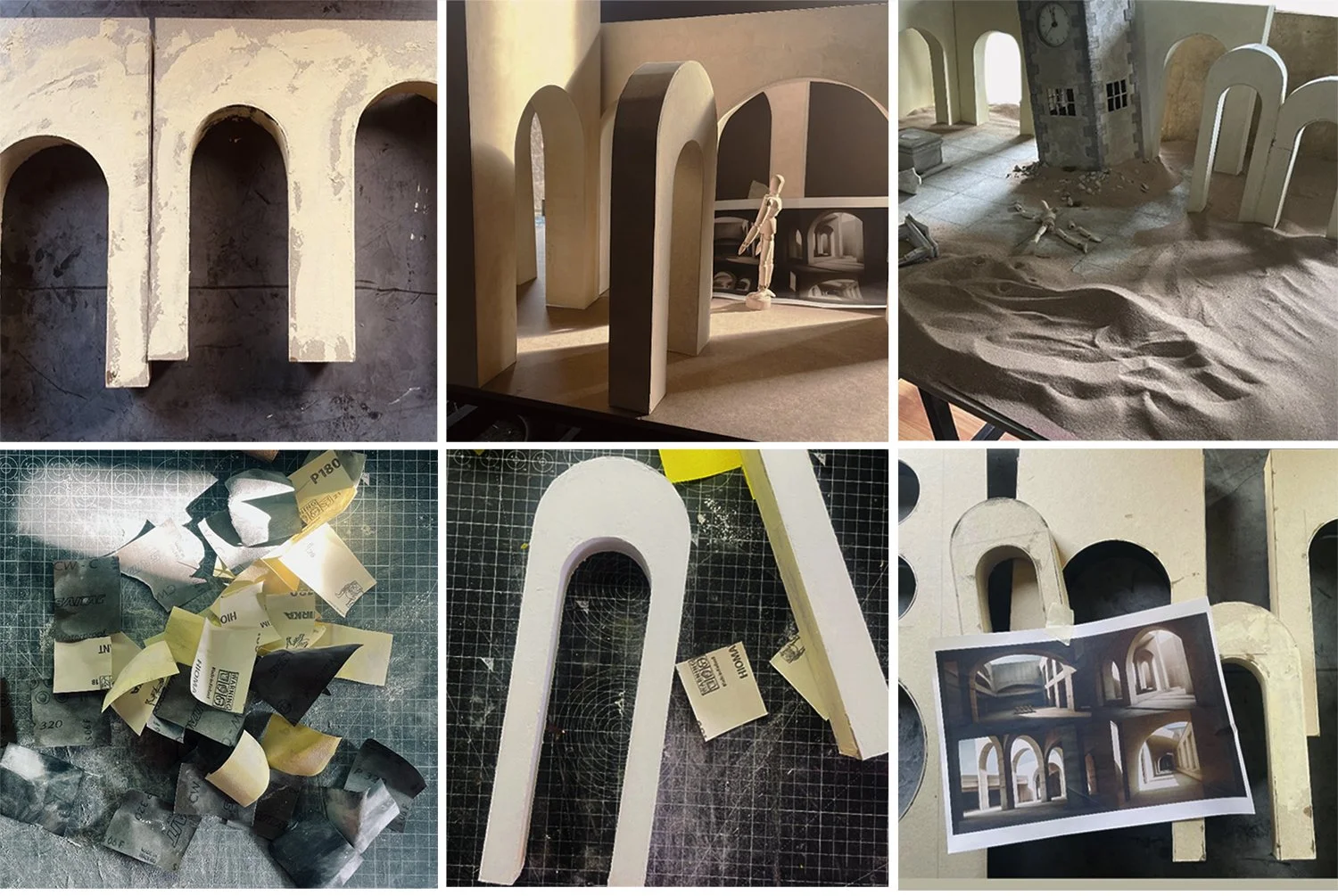
A physical miniature environment was constructed using cardboard, wood, and mixed materials to build a fragmented architectural world. Columns, arches, and a collapsing tower structure were designed to represent a decaying civilisation.
A central wooden figure was introduced to reinforce the conceptual theme of human fragility and control within a collapsing system.
OUTCOME
The final result is a unified visual system that transforms conceptual ideas into a commercial album identity. The project demonstrates how physical craftsmanship, AI tools, and digital post-production can operate together to create scalable narrative-driven imagery for music branding.